What Is the Ionic Framework?
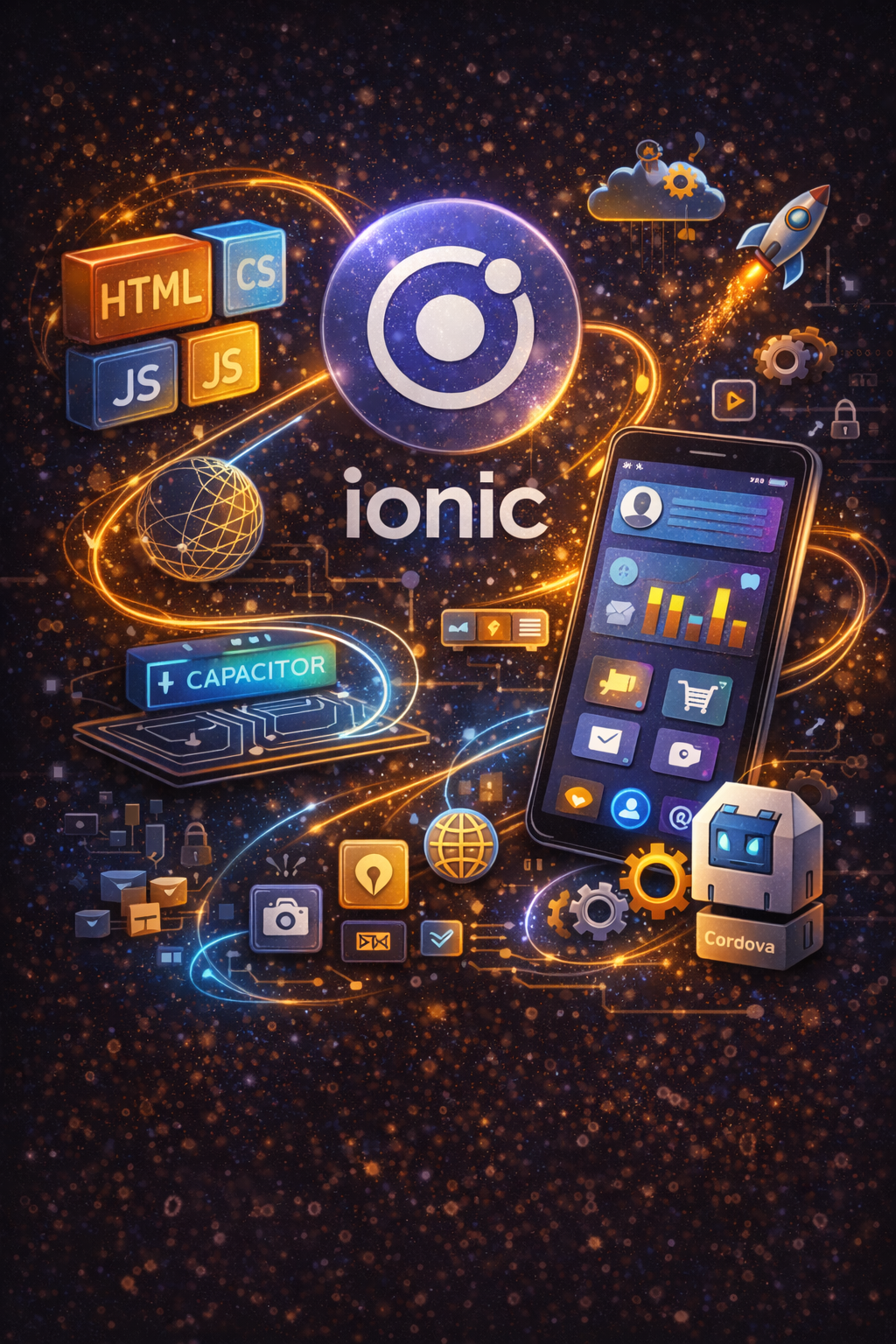
Ionic is an open-source framework for building mobile, web, and desktop applications that allows developers to create cross-platform apps using only web technologies such as HTML, CSS, and JavaScript. With Ionic, you can build applications for Android, iOS, and the Web using a single codebase.
History of Ionic
Ionic was first introduced in 2013 by the company Drifty Co. The main goal of this framework was to simplify the process of building mobile applications using the existing skills of web developers. At that time, native app development required learning languages such as Java or Objective-C, but Ionic changed that path.
With the introduction of Ionic, web developers were able to enter the mobile app development world without leaving the web ecosystem. Over time, Ionic became compatible with popular frameworks such as Angular, React, and Vue, and today it is considered one of the most powerful cross-platform development tools.
How Does Ionic Work?
Ionic is based on WebView. WebView is an embedded browser within the mobile operating system that runs HTML, CSS, and JavaScript content. Ionic applications are essentially web applications that run inside a WebView, but with the help of tools like Capacitor or Cordova, they can access native device features such as the camera, GPS, storage, and notifications.
What Is Capacitor?
Capacitor is Ionic’s official tool for bridging JavaScript code with native functionality. It is considered a modern replacement for Cordova and offers better security, performance, and flexibility. With Capacitor, developers can write native plugins and work directly with operating system APIs.
Advantages of Ionic
- Simultaneous development for Android, iOS, and Web
- Reduced development cost and time
- Use of standard web technologies
- Modern and attractive user interface design
- Support for Angular, React, and Vue
- Large and active community
Disadvantages of Ionic
Despite its many advantages, Ionic also has some limitations. The performance of Ionic applications in very heavy projects may be weaker compared to fully native applications. Additionally, reliance on WebView can cause performance issues on some older devices.
Ionic Compared to React Native and Flutter
Ionic is more suitable for developers who already have strong knowledge of web technologies. While React Native and Flutter render native components directly, Ionic is primarily web-based. Choosing between these tools completely depends on the project requirements and the team’s skills.
Use Cases of Ionic
Ionic is used to build various types of applications, including:
- Corporate and enterprise applications
- E-commerce applications
- Management dashboards
- Educational applications
- Prototypes
The Future of Ionic
Ionic remains one of the popular choices in the world of cross-platform development. With the advancement of Web APIs and improved browser performance, the gap between web and native applications has become smaller than ever before. By focusing on web standards, Ionic offers a stable and reliable future.
If you are a web developer looking to enter the mobile app development world, Ionic is one of the best choices to get started.